














Mice in the walls of your old house: the 9 places they get in
Scratching in the walls of a Boston-area old house? Nine entry points, how a builder seals them with metal and masonry, and when a wall has to be opened.
 Mateus Magno
Licensed Construction Supervisor · November 17, 2026 · 9 min read
You hear scratching in the plaster at 2 a.m., or you find droppings at the back of a kitchen drawer. A trapper comes, catches a few, and a month later the noise is back. In an old house the usual reason is simple: the holes are still open.
I'm a builder in Somerville, and I open a lot of old walls. Here are the nine places mice and rats get in, how a house is sealed with materials they can't easily chew, and what to do about scratching or a smell in the wall.
How small is "small enough"?
Smaller than most people think. The CDC says a mouse can fit through a hole the width of a pencil, about 1/4 inch. The University of Nebraska Extension rodent-proofing guide puts rats at a gap just over 1/2 inch, and notes that rodents can gnaw a small opening larger.
Two honest limits. The same guide says rodent-proofing alone doesn't guarantee a rodent-free building. It works alongside trapping and cleanup. And a Boston Globe remodeler, writing about a fieldstone basement, said no basement can be made fully mouse-proof. The goal is to close every opening you can find and keep them closed.
Old framing makes the noise travel. Many older houses are balloon-framed, with stud cavities running from the sill toward the roofline. A mouse that gets in low can reach a wall on another floor.
The 9 places they get in
| Where | Why an old house leaks here | The fix | Who |
|---|---|---|---|
| 1. Stone or brick foundation joints | Old lime mortar turns to dust and leaves gaps between stones | Clean out loose mortar and repoint with a mix a mason picks for your wall | Mason |
| 2. The sill gap | Wood sills sit on uneven stone, leaving a slot along the top of the foundation | Metal or masonry in the slot, not just caulk | Builder or mason |
| 3. Pipes, cables and gas, oil or electric lines | Holes were cut oversize decades ago and later lines were added | Fit metal or hardware cloth around the line, then seal over it | Builder; pro for gas or electric |
| 4. Dryer and other vents | Cracked ducts, missing dampers, loose hoods | Proper hood with a damper (no screen over a dryer outlet) | Builder or HVAC |
| 5. Old sewer line and floor drains | Breaks in a sewer line and open drain pipes are routes in | Repair the pipe, keep drain traps filled | Plumber |
| 6. Bulkhead | Rotted threshold and gaps where the doors meet the masonry | Repair the sill, tight doors, metal flashing along the bottom edge | Carpenter |
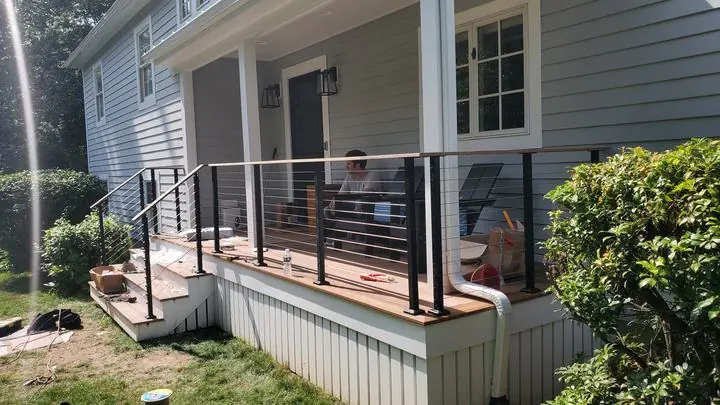
| 7. Porch and steps | Open framing, lattice and gaps where the porch meets the house | Metal-backed skirting and sealed joints at the house wall | Carpenter |
| 8. Doors at grade | Worn thresholds and no sweep | New sweep or threshold, metal on the lower edge of softwood doors | You or a carpenter |
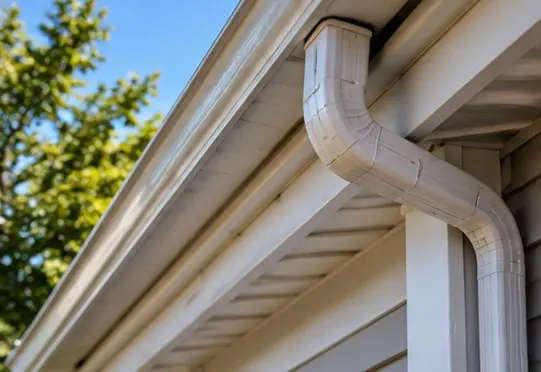
| 9. Roofline | Gaps at eaves, soffits, gables and attic vents | Hardware cloth behind vents, closed gaps at trim | Builder or roofer |
The CDC's check list covers utility lines, vents, drains, doors, the foundation line, eaves and gables. Boston adds repairing breaks in the sewer line. The sill, bulkhead and porch rows and the "why" column come from my own work on old buildings. See sewer line replacement if the drain is your suspect.
What can I check myself this week?
- Walk the outside at ground level. Look at the foundation joints, the sill line, every pipe or cable that enters, the dryer outlet and the bulkhead.
- Look for rub marks and droppings along basement walls, behind the water heater and under the kitchen sink. Mice run along walls.
- Check the doors. Light visible under an exterior door means a gap. Keep it under 1/4 inch.
- Check the roofline with binoculars for gaps at the eaves and screens on attic vents.
- Mark what you find with tape and photos. That list is what a builder or pest pro needs.
A fall walk-around like this is one line on the checklist in my Old-House Maintenance Calendar.
How is a house actually sealed?
The principle is the same everywhere: put gnaw-resistant metal or masonry in the opening, then finish over it. The Nebraska guide's list of materials is a good reference:
- Hardware cloth. 24-gauge, 1/4-inch mesh to exclude mice. 19-gauge, 1/2-inch mesh to exclude rats.
- Galvanized sheet metal. 24-gauge or heavier for patches, door edges and flashing.
- Concrete or mortar. For stone and brick, this is the permanent fix.
- Copper or stainless steel wool. For gaps under 3/4 inch, packed in tight. The guide says coarse steel wool works as a temporary fix but eventually rusts.
- Door sweeps and metal edging. Keep the gap under the door under 1/4 inch.
- Vent covers. Hardware cloth with 1/2-inch mesh is a compromise that keeps air moving on attic and foundation vents. Never put it on a dryer vent, a boiler flue or a combustion air opening.
Masonry takes care. The National Park Service's repointing guidance for historic masonry says bad repointing can damage the stone or brick itself, and the new mortar should match the old. The Globe remodeler suggested a harder cement-based mix for an interior stone wall. I'd let a mason decide per wall, after looking at it.
Fix the water too. The Globe piece notes that water coming through an unpointed outside wall can break down new interior pointing. Gutters, grading and downspouts matter, and I cover them in my wet basement guide.
One safety rule: never seal off combustion air, a boiler or water heater flue, or a dryer duct. If a gap is around a gas line, a flue or the electric service, hire a licensed pro.
What doesn't work on its own?
- Steel wool alone. Coarse steel wool rusts, per the Nebraska guide, and a damp stone basement is where it rusts fastest. CDC advises holding it in place with caulk or foam. In an old basement I'd use copper or stainless.
- Foam alone. The CDC lists spray foam as a way to hold steel wool in a small hole. I couldn't find a university test of whether mice chew foam, but trade sources say they do, so I treat foam as a filler over metal, never as the barrier. Nebraska also warns that sunlight breaks foam down.
- Caulk alone in a gap wider than a pencil.
- Poison in the house. Penn State Extension advises to avoid rodenticides inside homes: they risk children and pets, and mice that die inside walls smell and draw insects. UMass Extension notes that newer anticoagulant poisons can kill after a single feeding. Mass Audubon and other wildlife groups warn that second-generation anticoagulant poisons reach owls, hawks and pets through poisoned rodents.
- Glue boards. Penn State advises against them. Snap traps against the wall, out of reach of pets and kids, are the standard tool. UMass says rats may take four or five days to approach a new trap.
Traps catch what's inside. Sealing keeps the next ones out. You need both.
Scratching in the walls: what does a builder check first?
I start with the pattern. Night scratching that moves along a wall suggests mice or rats traveling in a cavity. Scratching in the attic or near a chimney could be something bigger, and I'd handle that separately.
- Find the way in. Basement walls, the sill, utility holes and the outside roofline first.
- Check the cavity from open ends. An open attic floor, a basement ceiling or a removable panel often shows droppings and nest material without cutting anything.
- Look at old insulation. Nests and droppings in it need to come out before new insulation goes in. My attic insulation and wiring guide covers what else to check first.
- Set snap traps where you find droppings and keep checking them.
- Seal behind the trapping, not before it. If you close every hole while mice are inside, they stay inside.
Cutting into a wall is the last step, not the first.
A dead-animal smell: when does the wall have to open?
Orkin's guidance is that the smell lasts from a few days to several weeks, with about 10 days for a mouse. A bigger animal takes longer. That's a pest company, not a university, so treat it as a rough range.
If the smell is faint and fading, waiting can be reasonable. If it's strong, flies gather at one spot or it's still there after two or three weeks, the source is usually near the strongest odor. Finding it often means cutting into the wall, and no spray removes the smell.
Here's how I'd handle it:
- Check the attic, basement ceiling and any cavity you can reach first.
- If the wall must open, keep the cut small and near the smell. Many old walls hide knob-and-tube or spliced wiring, so wiring gets traced before any cut.
- Remove the animal, nest and soiled material, then disinfect.
- Seal the entry point, then patch so the repair can be painted.
- On a house built before 1978, paid work that disturbs more than a small amount of painted plaster or trim has to follow lead-safe rules. See what that involves.
Cleaning up safely, and who is responsible
The CDC's cleanup page, read November 17, 2026, says do not sweep or vacuum droppings, urine or nesting material, because that can put virus-containing droplets in the air. Instead:
- Open doors and windows for 30 minutes and leave the area.
- Wear rubber or plastic gloves.
- Soak droppings with a disinfectant, or 1.5 cups of bleach per gallon of water made fresh, until very wet. Wait 5 minutes.
- Wipe up with paper towels. Bag them and put them in a covered trash can.
- Mop hard surfaces with disinfectant. Wash your hands after removing gloves.
For a dead rodent or nest, the CDC says spray it first, then double-bag it. For a heavy infestation, it calls for protective gear and a HEPA respirator, so call a professional.
On responsibility: under state sanitary code 105 CMR 410.550, the owner of a building with two or more units is responsible for keeping it pest-free. In a single-unit home the occupant handles elimination, but the owner is responsible if the structure wasn't maintained to keep pests out. In Somerville, the city asks residents to hire a licensed pest control professional and to ask for proof of a Massachusetts license. It also offers a free Residential Rodent Control Assistance Program through 311 or its online portal. The page doesn't list eligibility, so ask.
A pest pro handles the animals. A builder handles the building. If the house keeps feeding the problem, a porch with open framing, say, may need rebuilding.
Rats in the yard too? See what the city handles and what is on you.
Planning to insulate this winter? See whether mice chew foam, cellulose and fiberglass, and what to do first.
Want a second set of eyes?
I'm Mateus, a licensed builder in Davis Square. Since 2020 I've renovated and managed over $5 million in projects around Somerville and Greater Boston. If you've been trapping and the noise keeps coming back, book a free walkthrough. I'll look at the foundation, sill, penetrations and roofline and tell you what needs sealing and who should do it. For drafts that come in with the mice, see air sealing and my older-home winterizing checklist.
Frequently asked questions
How do mice get into the walls of an old house?
Mostly through gaps around the foundation and at the sill, holes around pipes and cables, vents, doors, drains and the roofline. The CDC says a mouse can fit through a hole the width of a pencil, about 1/4 inch. In many older houses the wall cavities run through several floors, so a mouse that gets in low can reach upper walls.
What's the best material to seal mouse holes?
Gnaw-resistant metal or masonry. The University of Nebraska Extension lists 1/4-inch, 24-gauge hardware cloth for mice, 1/2-inch, 19-gauge for rats, galvanized sheet metal, mortar or concrete, and copper or stainless steel wool for gaps under 3/4 inch. Foam or caulk can finish the job over metal, but I wouldn't rely on them alone.
Why does steel wool alone fail?
Coarse steel wool rusts, and the Nebraska guide calls it a temporary fix for that reason. The CDC recommends holding it in place with caulk or foam. In a damp old basement I'd use copper or stainless mesh packed in tight, then seal over it.
How long does a dead mouse smell in a wall?
Orkin says from a few days to several weeks, with about 10 days for a mouse. That's a pest company's estimate, not a university study. If the smell is strong or still there after two or three weeks, the source may need to be found by opening a small section of the wall.
Is it safe to sweep up mouse droppings?
No. The CDC says not to sweep or vacuum droppings, urine or nests. Ventilate for 30 minutes, wear gloves, soak the area with disinfectant or fresh bleach solution for 5 minutes, wipe it up with paper towels and bag them. For a heavy infestation, hire a professional.
Should I use poison for mice in the walls?
I wouldn't. Penn State Extension advises avoiding rodenticides inside homes, because of risks to children and pets and because animals can die inside walls. UMass Extension notes that newer anticoagulants can kill after one feeding. Seal entry points and use snap traps instead.
See everything I do, how I price work and the towns I work in.
Read this next
 Home Care & SafetyRats in Somerville and Boston: what the city will do, and what's on youWho to call in Somerville, Boston, Cambridge and Medford, what the city leaves to you, and a builder's weekend plan. Plus rats after construction next door.9 min read · Keep reading →
 Home Care & SafetyWet basement repair in Greater Boston: causes and fixes, from cheap to expensiveWet basement repair in Greater Boston: why old Somerville homes leak, fixes from gutters to waterproofing, national costs and engineer red flags.4 min read · Keep reading →
 Home Care & SafetyDo mice eat spray foam? Why the gap matters more than the insulationBefore a winter insulation job, a Somerville builder sorts what the evidence says about mice and foam, cellulose and fiberglass, and what to seal first.8 min read · Keep reading →
 Home Care & SafetyHow to winterize a drafty house: an air-sealing and insulation checklist for Somerville, Cambridge and Greater BostonCold rooms and high heating bills? Find where a Greater Boston house really leaks (attic, basement, windows, outlets) and fix it before winter, step by step.3 min read · Keep reading →
 Home Care & SafetyHow to winterize an older Somerville home: a builder's fall checklistA builder's fall checklist to winterize an older Somerville home: heating tune-up, Mass Save air sealing, frozen pipes, spigots, gutters and alarms.4 min read · Keep reading →
 Home Care & SafetyKnob-and-tube, vermiculite and other attic surprises: what to fix before you insulate an older Greater Boston homeOld wiring or gray pebbles in your attic? What knob-and-tube and vermiculite mean for insulating a Somerville, Cambridge or Boston home.3 min read · Keep reading →
Mateus Magno founded Magno & Co in 2020. He is a licensed Massachusetts Construction Supervisor (CS-123658), registered Home Improvement Contractor (HIC #220484) and certified Lead-Safe Renovator Supervisor who has renovated and managed over $5 million in projects across Greater Boston.
More about Mateus →