








Rats in Somerville and Boston: what the city will do, and what's on you
Who to call in Somerville, Boston, Cambridge and Medford, what the city leaves to you, and a builder's weekend plan. Plus rats after construction next door.
 Mateus Magno
Licensed Construction Supervisor · November 17, 2026 · 9 min read
You see a burrow by the foundation, or a rat crosses the yard at dusk. Who do I call? Will the city come to my yard? What do I do myself? And if the house next door is being torn down, is this my problem or the builder's?
I'm a builder in Somerville, not a pest controller. But rats stay because of how a yard and a house are built and kept, and that part is my lane. Here's who handles what, a plan for this weekend, and what to do when construction next door stirs them up.
Who do I call about rats in Somerville, Boston, Cambridge or Medford?
Every city takes reports, but the front door is different. This is what each city's own pages said as of November 17, 2026.
| City | How to report | What help exists |
|---|---|---|
| Somerville | Call 311 (617-666-3311), email 311requests@somervillema.gov or use the online form. | A free Residential Rodent Assistance Program, applied for through the city's Citizenserve portal. The city page doesn't list eligibility; the Somerville Times reported two months of service. |
| Boston | Report to 311. The city says teams will be on site within 24 to 48 hours. | Inspectors send abatement notices to private owners. If it isn't fixed, the owner goes to a hearing. |
| Cambridge | Online report or the Commonwealth Connect app is fastest. Rodent hotline: 617-349-4899, or rodents@cambridgema.gov. | A free program for homes with four or fewer units: an inspection plus at least three visits in 60 days. Owners and tenants can apply. |
| Medford | Call the Board of Health at 781-393-2560 or email bohadmin@medford-ma.gov to request an inspection. | The Board inspects and advises, but its post says it doesn't provide rodent control. Unfixed conditions can bring fines. |
Sources: the city pages for Somerville, Boston, Cambridge and Medford (Medford's post is from September 11, 2024). Programs change, so check the page before you apply.
Report even if you plan to fix things yourself. Boston.com reported on September 23, 2026 that Boston's 311 database showed more than 1,700 open rodent reports, and Somerville logged 621 rodent complaints in 2024, per the Somerville Times (January 15, 2025). Responses can take a while, so work on your own lot at the same time.
What does the city handle, and what is left to me?
The short version: the city deals with public space, and you deal with your lot.
Somerville's page says private owners must keep their property safe and healthy. Inspectional Services enforces the State Sanitary Code and Somerville Code Section 11-38 on private property, and the City can require an owner to bait. Boston works the same way: inspectors trap and bait in parks and public ways, while owners of private property get notices and must correct the problem.
What the cities ask owners to do is consistent:
- Trash in tight containers. Metal or heavy plastic barrels with tight lids, replaced when a lid doesn't close. Cambridge asks you to set them out as close to pickup time as possible.
- No food left out. Pet food comes inside. Bird food goes only in a feeder, with spills cleaned daily.
- Compost in a closed bin, or use Somerville's free food-waste drop-off.
- Clear the clutter. Overgrowth and debris give rats shelter, and Somerville's inspectors look for both.
- Fix a broken sewer line. Boston lists it as an owner step. See what a sewer lateral replacement involves.
- Seal holes in the building, inside around pipes and ducts and outside at the foundation.
I haven't seen the city or a university back repellents like peppermint or cayenne pepper, so I'd spend the effort on food and sealing instead.
What can I do this weekend?
You don't need a contractor for the first round.
| When | Task | Who does it |
|---|---|---|
| Saturday morning | Walk the outside of the house and the fence line. Photograph burrows, droppings and gnaw marks with the date, and report them to 311 or your board of health. | You |
| Saturday | Lidded barrels for trash, pet food inside, bird feeders emptied, compost closed, debris and stacked items off the ground. | You |
| Sunday | Mark every gap bigger than half an inch at the foundation, pipes, vents and doors. Buy half-inch hardware cloth, metal mesh and masonry sealant. | You |
| This week | Book a licensed pest company if you saw burrows, fresh droppings or rats indoors. Ask a builder to price bigger fixes: skirting, a cracked foundation, regrading. | Licensed pro and builder |
| Before the ground freezes | Finish digging, regrading and buried mesh. Frozen ground makes that work hard. Call 811 (Dig Safe) at least 3 business days before any digging so gas, electric and water lines get marked. | Builder, or you for small jobs |
Seal only after you know the space is empty. Rats trapped behind a new seal chew a new opening or die in there. If you've seen them going in and out, call a pro first.
How do I know rats are living on my lot?
Somerville's page lists the signs: burrow holes 2 to 4 inches wide with smooth edges, often under plants or stored items; droppings about half an inch to three quarters of an inch long, with blunt ends; gnaw marks on cans, fences and porches; and worn runways along fences and walls. Burrow plus droppings means call a pro.
What does a builder fix: grading, foundation gaps, porches and decks?
Traps and bait deal with the rats you have. Building details decide whether new ones move in. For sizes, I rely on a University of Nebraska-Lincoln Extension guide to rodent-proofing. It's written for farm buildings, but a rat doesn't care.
- Know the numbers. Per that guide, rats squeeze through gaps slightly larger than half an inch, mice through a little over a quarter inch, and rats can burrow at least 36 inches straight down. Use 19-gauge hardware cloth with half-inch openings for rats, quarter-inch to stop mice too. Foam and plastic don't stop a gnawing animal.
- Foundation gaps and cracks. Patch cracks with masonry grout or concrete. Pack pipe and cable penetrations with metal mesh and seal over it. Old stone and brick often needs repointing.
- Grading and the strip along the wall. Soil that slopes toward the house gives water and burrows a path to the foundation. Regrade so water runs away, and keep a strip about 3 feet wide along the wall free of weeds and piles (the guide suggests crushed rock). For water problems, see wet basement repair in Greater Boston.
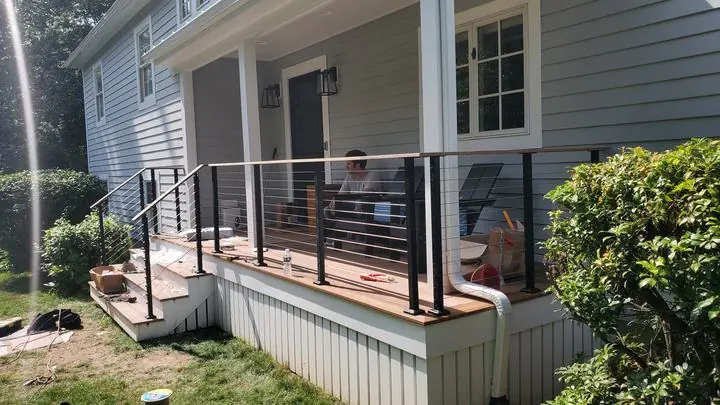
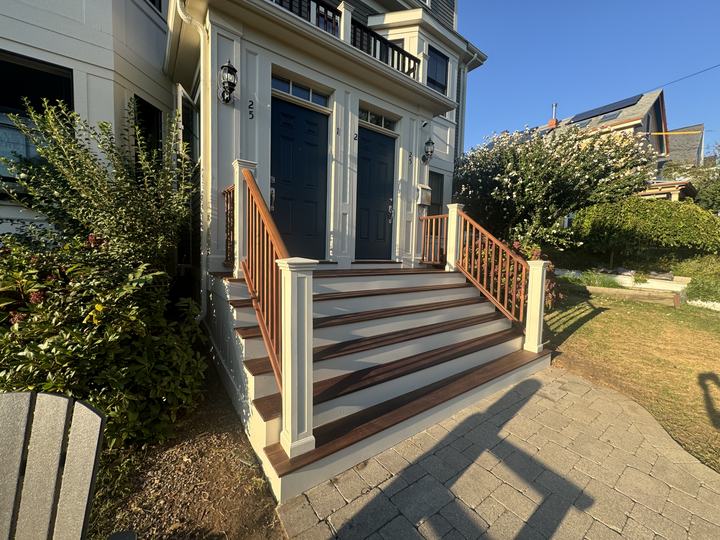
- Under porches and decks. The space is dark, dry and left alone, so rats like it. Most lattice has openings bigger than half an inch, so it doesn't stop them. Use solid skirting or hardware cloth fastened to the frame, with the bottom edge turned outward and covered with soil or stone so a rat can't dig under, plus an access panel. One commercial deck guide suggests a 12-inch outward apron. I found no university source for an exact dimension, so ask your builder to explain the detail.
- Sheds and doors. Raise sheds off the ground or set them on concrete or gravel. Keep door gaps under a quarter inch, with metal flashing at the bottom edge.
Planning outdoor work anyway? A new porch or deck is the easiest time to skirt it properly. See porch rebuild costs in Somerville and deck costs in Massachusetts. For the rest of the house before winter, see how to winterize an older Somerville home. My Old-House Maintenance Calendar ebook lists which exterior checks fall in which month.
The house next door is being torn down and now I have rats. Whose problem is that?
Homeowners ask me this a lot. Demolition and digging tear up burrows and shelter, and pest pros commonly say rats then move to nearby yards. I can't prove it for any one lot.
What I could verify depends on the city:
- Boston. Per the city's pest management page, no building permit is issued for renovation, conversion or new construction until the applicant shows the premises were treated or are free of rodents and insects. The same page says the contractor or applicant is responsible for corrective measures if the work causes an infestation in immediately abutting properties. Also, Boston's demolition permit page asks for a letter or bill from a pest control contractor confirming pest management before and after demolition begins.
- Somerville. I couldn't find a city page that sets a rodent rule for private construction sites. The page mentions construction only on public property. Ask Inspectional Services what applies to the site next door.
- Cambridge and Medford. Cambridge says it works to control rodents during construction but lists no requirements. Medford's pages didn't mention construction.
What I'd do, in order:
- Document. Dated photos, and when the work started.
- Report to 311 or the board of health, with the work site's address and yours.
- Ask the contractor, politely and in writing. The permit or sign lists who is in charge. Ask whether a licensed pest company is baiting and monitoring the site.
- In Boston, mention the permit requirement to Inspectional Services.
- Seal and clean your own lot now, whatever the paperwork says.
On a well-run site I'd expect baiting by a licensed company before demolition, covered dumpsters, and open sewer lines capped. If you're the one building, put it in the contract. See Somerville construction hours and dumpster rules.
When should I hire a licensed pest company, and what should I know about poison?
Hire one if you see burrows, fresh droppings or rats indoors, or if cleanup and sealing haven't ended the sightings. Somerville says to ask for proof of Massachusetts pest control licensing before signing. The state licenses commercial applicators through the Department of Agricultural Resources (MDAR), which keeps a searchable license list. Ask for a written plan: the entry points they found and how often they'll return.
Poison is where homeowners get into trouble, and where I'd be most careful:
- Never put out loose bait. Dogs, cats and children find it.
- Poisoned rats get eaten. Mass Audubon reports a Great Horned Owl in Belmont died of secondary poisoning in November 2024, and cites a 2020 study finding exposure in every red-tailed hawk tested at a Massachusetts wildlife clinic. It says second-generation rodent poisons were banned from retail sale in 2015 but licensed pros can still use them here. Pets can be hurt by eating poisoned rodents too.
- Ask the pro what they use: which product, whether stations are tamper-resistant and anchored, how often they check them, and what non-poison options exist. I couldn't find a Massachusetts rule on bait stations for homeowners, so the questions matter.
- If a pet may have eaten bait or a poisoned rodent, call your vet or an animal poison hotline right away.
- Poison can leave a dead rat in a wall. Seal and trap first.
Source: Mass Audubon's report on the Belmont owl (November 20, 2024).
Already hearing scratching inside the house? See where mice and rats get into old walls and how pros seal them.
Want a second set of eyes on the outside of your house?
If you've found gaps you can't close, a porch or deck with open space underneath, or a foundation that needs more than a patch, I'll walk the outside of your property and tell you what a carpenter or mason should fix and what should wait for a pest pro. The walkthrough is free, and I'll say so if the answer is mostly cleanup. Request a free walkthrough here.
Frequently asked questions
Who do I call about rats in Somerville?
Call 311 at 617-666-3311, email 311requests@somervillema.gov or use the online 311 form, and say where you think the rats feed or burrow. Inspectional Services handles private property complaints. You can also apply for the city's free Residential Rodent Assistance Program through its Citizenserve portal.
Will the city treat rats on my own property?
It depends on the city. Somerville and Cambridge run free programs for residents, though Cambridge limits its program to homes with four or fewer units. Boston sends abatement notices to owners of private property. Medford's Board of Health inspects and advises but says it doesn't provide control services. In all four, keeping the lot clean and sealed is the owner's job.
Can a neighbor's construction project cause rats at my house?
It can. Demolition and digging disturb burrows and shelter, and pest pros commonly say rats then move to nearby yards. In Boston, a permit for renovation or new construction requires evidence of pest treatment, and the contractor is responsible for corrective measures if the work causes an infestation next door, according to the city's pest management page. I couldn't find a comparable Somerville rule, so ask Inspectional Services.
What gap size can a rat get through?
According to a University of Nebraska-Lincoln Extension guide, rats can squeeze through gaps slightly larger than half an inch, and mice through gaps a little over a quarter inch. Use 19-gauge hardware cloth with half-inch openings for rats, or quarter-inch mesh to stop mice too. Gnawing enlarges small gaps quickly.
How do I keep rats from nesting under my porch or deck?
Close the space with solid skirting or hardware cloth fastened to the frame, with the bottom edge turned outward and covered so rats can't dig under it. Add an access panel. Lattice usually has openings too big to stop a rat. Make sure no animals are inside before you seal it.
Is rat poison safe to use around pets and wildlife?
Not without real care. Poisoned rodents can poison the pets and wildlife that eat them, and Mass Audubon reports owl and hawk deaths and exposure in Massachusetts. Never use loose bait, ask a licensed pro which product and which tamper-resistant stations they use, and ask about non-poison options. If a pet may have eaten bait, call a vet right away.
See everything I do, how I price work and the towns I work in.
Read this next
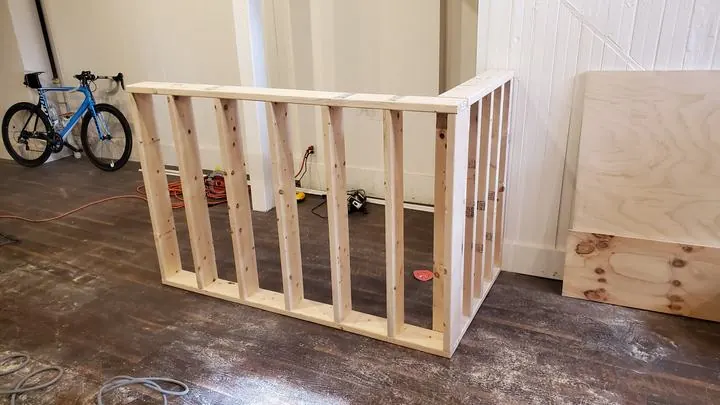 Home Care & SafetyMice in the walls of your old house: the 9 places they get inScratching in the walls of a Boston-area old house? Nine entry points, how a builder seals them with metal and masonry, and when a wall has to be opened.9 min read · Keep reading →
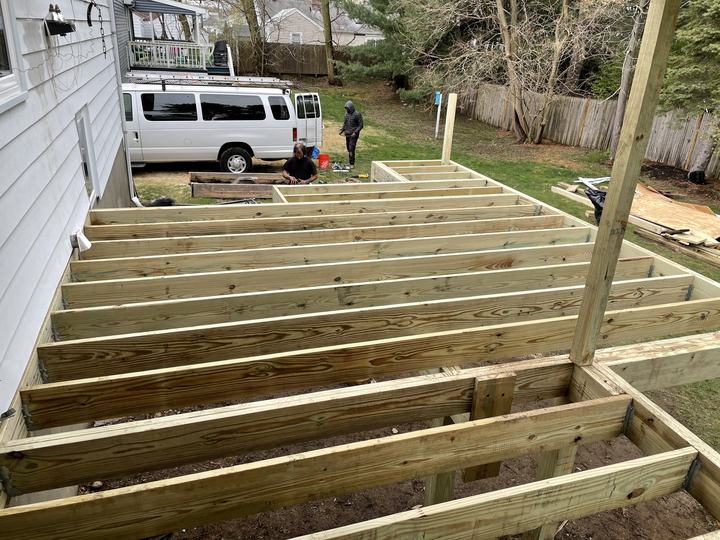 Permits & RulesConstruction hours, noise and dumpster permits in Somerville: what owners should knowSomerville's allowed construction hours, how street and driveway dumpster permits work, placement rules, and how to report problems through 311.4 min read · Keep reading →
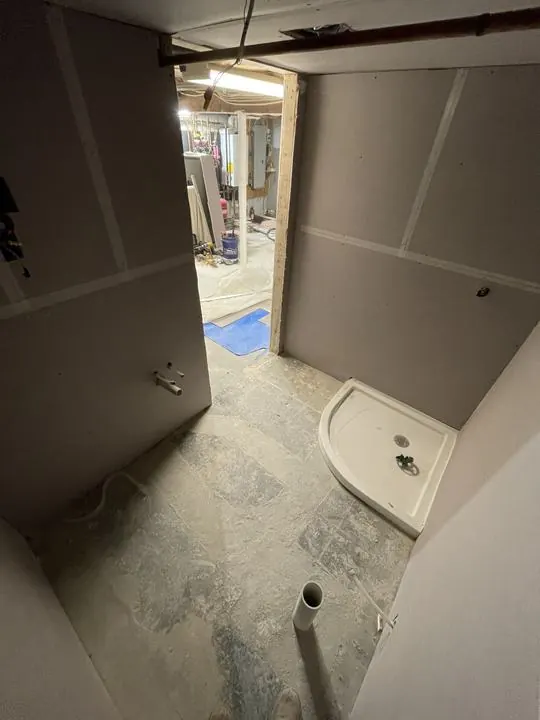 Home Care & SafetyWet basement repair in Greater Boston: causes and fixes, from cheap to expensiveWet basement repair in Greater Boston: why old Somerville homes leak, fixes from gutters to waterproofing, national costs and engineer red flags.4 min read · Keep reading →
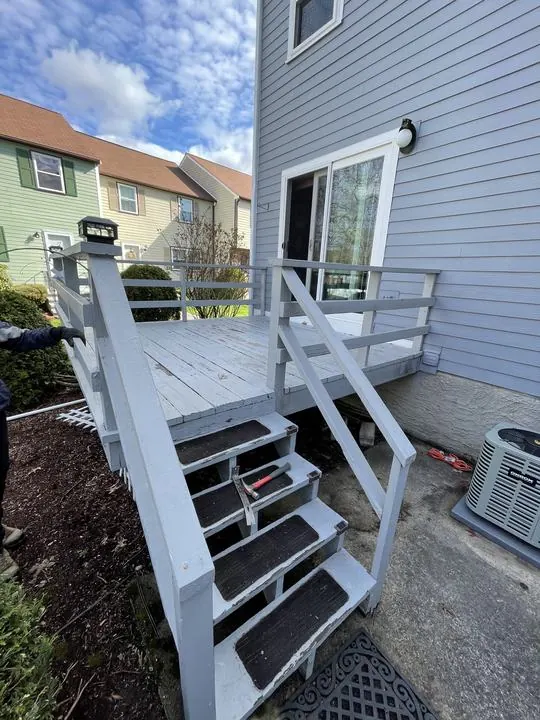 Kitchens, Baths & ExteriorsPorch rebuild cost in Somerville: what drives the price on a triple-deckerPorch rebuild cost in Somerville explained: rot, stacked triple-decker porches, permits, 42-inch guards, stair rules and what really drives the price.4 min read · Keep reading →
 Somerville & ADUsSomerville's 10 new compost bins: how the free food waste drop-off worksSomerville added 10 free public compost bins. How to get the access code, what you can put in, what stays out, and the Nov 7 Pumpkin Smash in East Somerville.3 min read · Keep reading →
 Home Care & SafetyHow to winterize an older Somerville home: a builder's fall checklistA builder's fall checklist to winterize an older Somerville home: heating tune-up, Mass Save air sealing, frozen pipes, spigots, gutters and alarms.4 min read · Keep reading →
Mateus Magno founded Magno & Co in 2020. He is a licensed Massachusetts Construction Supervisor (CS-123658), registered Home Improvement Contractor (HIC #220484) and certified Lead-Safe Renovator Supervisor who has renovated and managed over $5 million in projects across Greater Boston.
More about Mateus →