









How much snow can your roof hold? What Boston-area owners should know before the next storm
Depth is the wrong number. Here is what snow really weighs, the code figure for Boston-area roofs, six warning signs and what to do before the next storm.
 Mateus Magno
Licensed Construction Supervisor · November 17, 2026 · 9 min read
Every winter I hear the same question from owners of old Greater Boston houses: "There's a foot of snow up there. Is the roof going to be okay?" Triple-decker owners with flat roofs ask it the most.
The honest answer is that depth alone doesn't tell you. Below I explain what snow really weighs, what the Massachusetts code says about our area, the six warning signs worth knowing and what to do before a big storm. Most roofs are fine. Knowing which ones aren't, and what to do about it safely, is the point.
Is the snow on my roof actually a danger?
Usually not. FEMA's Snow Load Safety Guide (January 2013) says plainly that most buildings are not at risk of snow-induced failure, and that trying to remove snow from a roof is more often hazardous than helpful. It also says buildings can be vulnerable when snow adds up beyond what the roof was designed for.
That second part matters here. The same guide notes that older buildings may not have been designed for snow loads the way they are understood today, and that drifting and sliding snow only entered building codes in recent decades. Our triple-deckers and Victorians are 100 years old.
It does happen locally. In February 2015, Massachusetts emergency officials reported more than 100 full and partial roof collapses in about a week. That was an extreme stretch, but it shows what a snowy month can do.
How much does snow actually weigh?
Snow is mostly air and some water. Water weighs about 62.4 pounds per cubic foot. A National Weather Service article on snow loads turns that into a handy rule: every inch of water in the snowpack adds about 5.2 pounds on each square foot of roof. That is why one foot of fluffy snow and one foot of slush can differ by a factor of seven.
| What is on the roof | Approximate weight | What it means for a roof |
|---|---|---|
| Light, dry fresh snow | About 3 lb per sq ft for each foot of depth | A foot or two is rarely a problem on its own |
| Wet, heavy snow | Up to about 21 lb per sq ft for each foot of depth | One foot is a real load. Two feet is a serious one |
| Ice | A little under 5 lb per sq ft per inch, about 57 per foot | An ice layer under or in snow adds far more than the same depth of snow |
| Rain on top of snow | Snow soaks up water and gets denser | A cold rain after a big storm can add load fast. The code only allows for light rain on snow |
The snow and ice numbers are from FEMA's guide, which notes that East Coast snow tends to be wetter and denser than snow in the West.
What does the Massachusetts code say about our area?
I checked this. The Massachusetts Residential Code (780 CMR) lists a ground snow load of 40 pounds per square foot (psf) and a minimum flat roof snow load of 30 psf for Boston, Somerville, Cambridge, Medford, Everett, Arlington, Belmont, Watertown, Brookline and Malden. You can see the table, with the 10/11/2024 amendment date, in Table R301.2(2) at Cornell's Legal Information Institute. I read the table on Cornell's copy of the code. It also confirms the 40 psf number I use in my deck permit guide.
Two things to understand about those numbers:
- Ground load is not roof load. It is the starting point for designers. The roof load comes from it and from the roof's shape, exposure and heat. FEMA warns that measuring snow on the ground and assuming it equals the roof load is incorrect. Wind scours some roofs and piles drifts on others.
- It's a design number for new work, not a collapse number. For scale, 30 psf is roughly 17 inches of wet, heavy snow, or about 6 inches of solid ice, by my arithmetic from the FEMA figures. Your roof may be stronger than the code or weaker, depending on its framing and condition. That is exactly why age and condition matter more than any single threshold.
Don't trust an online rule of thumb as a limit for your house. For a real answer, a structural engineer can review your framing.
Why flat roofs and triple-deckers need extra attention
The state fire and emergency agencies say flat and low-pitched roofs are at the greatest risk of buckling under heavy snow and ice. Snow doesn't slide off them, so each storm stacks on the last. Triple-deckers have a few more problems built in:
- Ponding. If a drain, scupper or gutter is blocked, melt water collects in the low spots. FEMA calls out ponding as a concentrated load. A sag in the roof deck makes the next puddle deeper, which sags it more.
- Drifts. Wind piles snow against parapets, bulkheads, chimneys and the back wall of a taller neighbor. That load is uneven, and it sits on framing designed for an even one.
- Frozen drains. A frozen drain can't carry off a midwinter thaw. My flat roof guide covers drains and scuppers.
- Ice at the edges. Ice dams add the heavy stuff right where the load lands. See my ice dam post for causes and fixes.
Steep slate roofs shed snow better but add risks, like sliding snow and loose slates. See my notes on slate roof repair.
What about porches and decks?
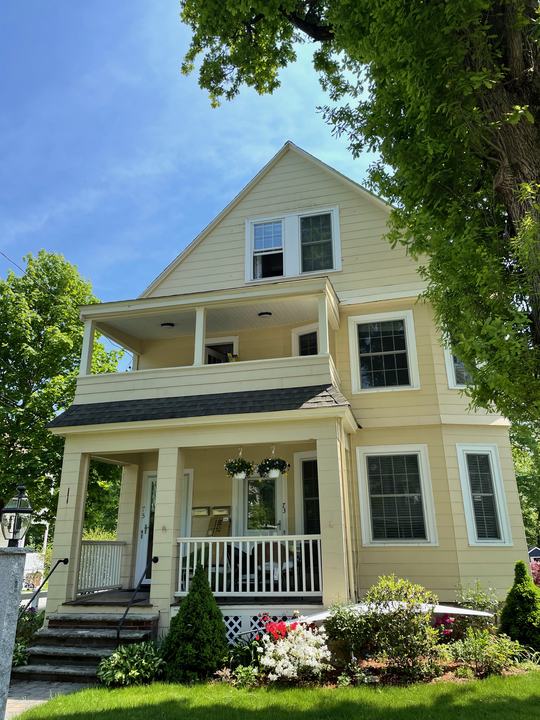
Porches and decks are easy to forget. FEMA lists porch roofs and lower roofs as places where drifts collect, and sliding snow from the main roof can dump on them. A porch roof under a steep upper roof can get a big, sudden load.
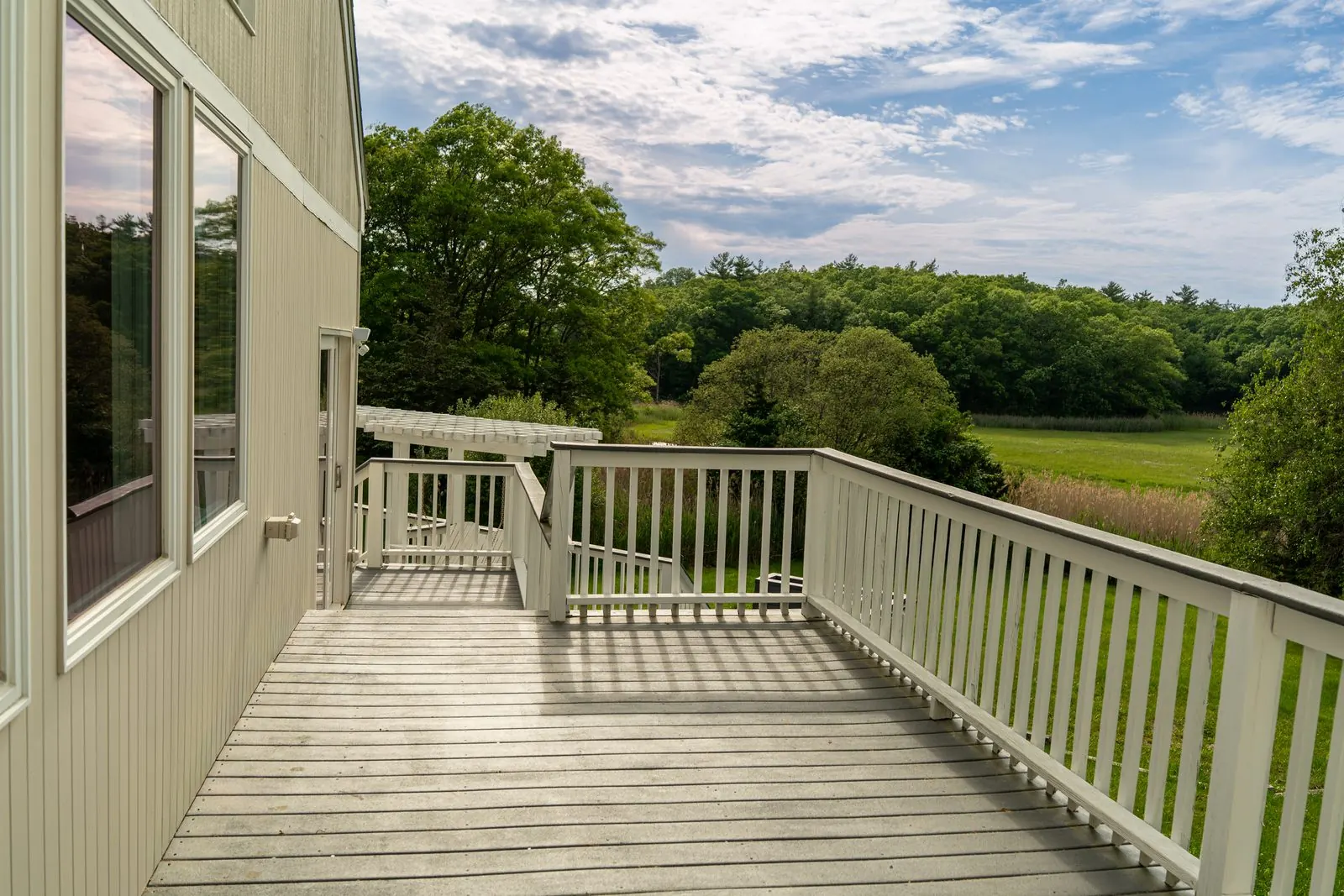
The weak spots on an older porch are not the decking. They are the connection to the house (the ledger), the post bases and the stair stringers. Rot there turns a normal snow load into a failure. On a triple-decker, the stacked porches share that load, so a rotted post at the bottom matters for all three floors.
If a porch or deck is sagging, or a post or the stairs look loose or rotted, stay off it and call a pro. If it looks sound, clear it gently from the top of the stairs with a plastic shovel and keep people off the edges. See my porch and stair safety guide and the deck rules in the deck permit post. For an inspection list, my Porches and Decks on Older Homes guide goes through each structural connection.
Six warning signs your roof is stressed
The state fire, public safety and emergency agencies (a February 2017 joint release, hosted by the City of Springfield) and FEMA list the same signs. The six I'd teach any owner:
- Sagging. A roof line, ceiling or rafter that dips or is no longer straight.
- New cracks. Fresh cracks in plaster, drywall or masonry, especially at corners and above doors.
- Sticking doors and windows. Doors that pop open or windows that suddenly won't open or close.
- Noises. Creaking, cracking or popping, especially on a quiet night.
- Cracked or bent framing. Split wood in the attic, bent supports, or bowed pipes or conduit fixed to the ceiling.
- Severe leaks or deep puddles. Water coming in, or standing water on a flat roof where it doesn't belong.
If you see or hear any of these signs while there is heavy snow on the roof, leave the building right away and call 911 from outside. Do not go back in to check, grab things or take a photo. If you also smell gas, leave without touching light switches. A sticking door can also just be damp wood, so a single sticking door is a reason to call a pro, not to panic. A sag, a growing crack, or any cracking or popping noise with snow on the roof means out first, then 911.
A big storm is coming: what to do, and what not to
| Do | Don't |
|---|---|
| Clear gutters, scuppers and roof drains before the first storm | Don't climb a ladder to a snowy or icy roof. State guidance warns that ice builds up on rungs and boot soles |
| Use a roof rake from the ground on a pitched roof, working from the edge, standing clear of where the snow will slide, with a helmet and eye protection | Don't add your weight, or a worker's, to a roof that may already be overloaded |
| Leave a couple of inches of snow. The state says to shave it to 2 or 3 inches, since scraping to bare risks the shingles | Don't chip ice, or use torches, heat guns or other heaters to melt it |
| Keep tools and ladders far from utility wires, and protect gas and electric meters from falling snow and ice | Don't let snow bury the furnace or dryer vent. Clear them to prevent carbon monoxide, and check your CO alarms |
| Book a pro before the storm, not during it. FEMA warns that contractors get hard to find once the snow starts | Don't send anyone onto a roof that shows any warning sign |
For a flat roof, the state guidance does allow careful shoveling, throwing the snow over the side and away from the building. My view is different for a triple-decker, three stories up. The risk of a fall is serious, and you can't see skylights, drains or soft spots under a drift. I'd hire a pro who does this for a living, with a harness and a plan.
When to clear? FEMA says it makes sense when the load is near what the roof can carry, or when more snow is coming on top. For a few inches, or a dry foot on a sound roof, I'd leave it. After several storms in a row, the state's 2017 advisory strongly encouraged owners to have roofs cleared, so call a pro early if the snow keeps stacking up. For ice along the eaves, don't chip it: read my ice dam post. Sidewalk shoveling is a separate set of rules with deadlines and fines, covered in my Somerville snow and ice rules post.
What to have checked in the spring
After a heavy winter, give the roof a look once the snow is gone:
- New or widening cracks in ceilings and plaster, and doors or windows that still stick once dry.
- Sagging in the top-floor ceiling or the roof line from the street.
- In the attic, with a flashlight and no stepping off the joists: any cracked, split or bowed rafters or ceiling joists, and daylight or damp stains.
- On a flat roof, any spots where water stood after rain, and drains, flashings and seams.
- Porch and deck ledgers, posts and stair stringers.
Looking and photographing is fine. Cutting, sistering or jacking framing is not a DIY job. A structural engineer should size the fix for any real sag, and a licensed contractor should do the work under a permit when it's required. My repair or replace post helps with the roof-covering decision, and the winter projects post lists work that can happen in the cold months.
Want a second set of eyes on your roof and porches?
I'm Mateus, a licensed builder based in Davis Square. Since 2020 I've renovated and managed over $5 million in projects around Somerville and Greater Boston. If you have a flat roof, a tired porch or a ceiling crack you aren't sure about, book a free walkthrough and we'll look at it together, before the next storm and not after.
Frequently asked questions
How much snow can a roof hold in Massachusetts?
There's no single number. The Massachusetts residential code lists a 30 psf minimum flat-roof snow load and a 40 psf ground snow load for Boston, Somerville, Cambridge and neighboring towns, but an old roof's real capacity depends on its framing, condition and shape. FEMA puts a foot of wet, heavy snow at up to about 21 psf, so depth alone doesn't tell you.
How heavy is snow on a roof?
FEMA's snow load guide gives about 3 pounds per square foot for each foot of light, dry snow and up to about 21 for wet, heavy snow. Ice is about 57 per foot. A National Weather Service article adds a rule of thumb: each inch of water in the snow adds about 5.2 psf.
What are the warning signs that a roof is overloaded?
Sagging, new cracks in ceilings, plaster or masonry, doors and windows that suddenly stick or pop open, creaking or popping sounds, cracked or bent framing, and severe leaks or deep standing water on a flat roof. State agencies advise leaving the building and calling 911 from outside if you see signs of a problem.
Should I shovel snow off my flat roof?
State guidance allows careful shoveling of a flat roof, but the fall risk is real, and you can't see skylights, drains or soft spots under the snow. I'd hire a pro who does this for a living and book before the storm. If there are any warning signs, no one should go up.
Is a roof rake safe to use?
From the ground, on a pitched roof, working from the edge, it's the method state agencies recommend. Leave 2 or 3 inches of snow so you don't damage the roof covering, keep away from utility wires, and wear head and eye protection. Stay out of the path of sliding snow, and never use a ladder on an icy day.
How do porches and decks handle snow?
They're designed for the code snow or deck load, which for decks in Somerville is the greater of 40 psf live load or the ground snow load. Problems usually come from rot at the ledger, posts and stair stringers, or from snow sliding off a higher roof. Clear them gently from the top of the stairs and have the connections checked in spring.
See everything I do, how I price work and the towns I work in.
Read this next
 Home Care & SafetyIce dams on Somerville roofs: why they form and how to stop themWhy ice dams form on Somerville roofs, the damage they cause, and how to stop them with air sealing, insulation and Mass Save help, plus safe removal.3 min read · Keep reading →
 Kitchens, Baths & ExteriorsFlat roof replacement cost on a triple-decker: EPDM, TPO or modified bitumen?Flat roof replacement cost for Somerville triple-deckers: national price ranges, EPDM vs TPO vs modified bitumen, insulation rules, drains and roof decks.4 min read · Keep reading →
 Home Care & SafetySomerville snow and ice rules for property owners: sidewalks, fines and parkingSomerville snow rules for property owners: the six-daylight-hour sidewalk deadline, fines, snow emergency parking, hydrants, roofs and how to report.3 min read · Keep reading →
 Home Care & SafetyPorch and stair safety on Somerville triple-deckers: warning signs, permits and helpWhy stacked porches on Somerville triple-deckers rot, the warning signs to watch for, permit rules for porch repair, and City help for eligible owners.4 min read · Keep reading →
 Kitchens, Baths & ExteriorsRoof Repair in Somerville, MA: When to Repair and When to ReplaceRoof repair in Somerville, MA or full replacement? Signs to check on older Greater Boston homes, flat triple-decker roofs, permits and what a quote shows.4 min read · Keep reading →
 Home Care & SafetyHow to winterize an older Somerville home: a builder's fall checklistA builder's fall checklist to winterize an older Somerville home: heating tune-up, Mass Save air sealing, frozen pipes, spigots, gutters and alarms.4 min read · Keep reading →
Mateus Magno founded Magno & Co in 2020. He is a licensed Massachusetts Construction Supervisor (CS-123658), registered Home Improvement Contractor (HIC #220484) and certified Lead-Safe Renovator Supervisor who has renovated and managed over $5 million in projects across Greater Boston.
More about Mateus →