




Porch and stair safety on Somerville triple-deckers: warning signs, permits and help
Why stacked porches on Somerville triple-deckers rot, the warning signs to watch for, permit rules for porch repair, and City help for eligible owners.
 Mateus Magno
Licensed Construction Supervisor · October 20, 2026 · 4 min read
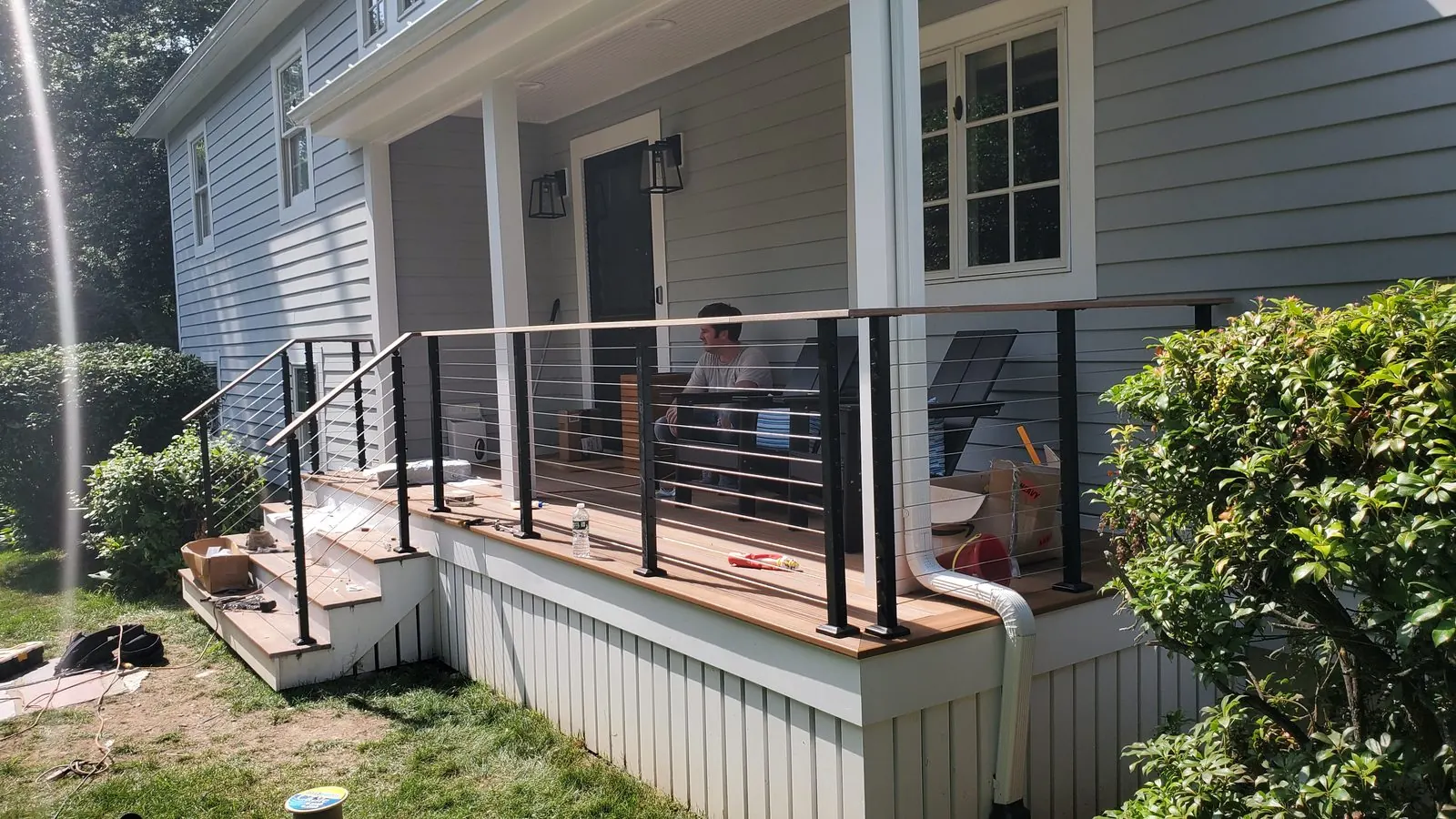
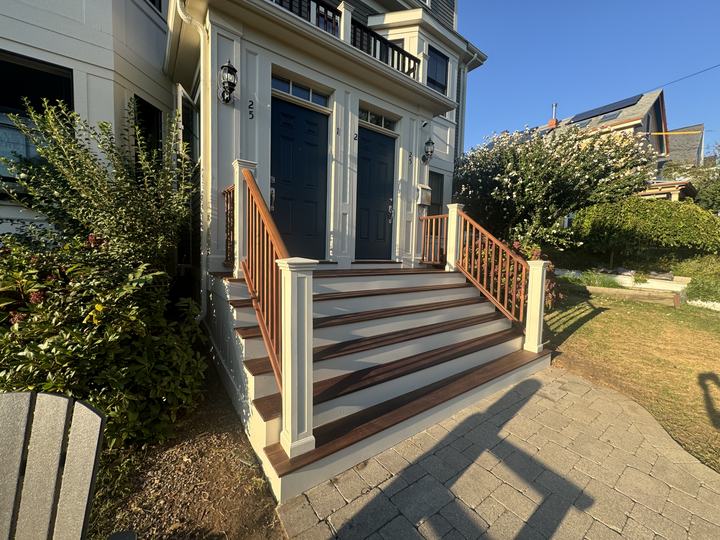
Almost every Somerville triple-decker has the same feature on the back: three porches stacked on top of each other, plus the stairs that tie them together. They're great for summer nights, but they take a beating from our weather, and a failing porch is one of the most serious safety problems in older 1900–1930 housing.
Here's what I look for, what the City requires when you fix one, and where to get help paying for it.
Why stacked porches rot
Porches don't usually fail all at once. They fail slowly, at the spots where water gets in and can't get out.
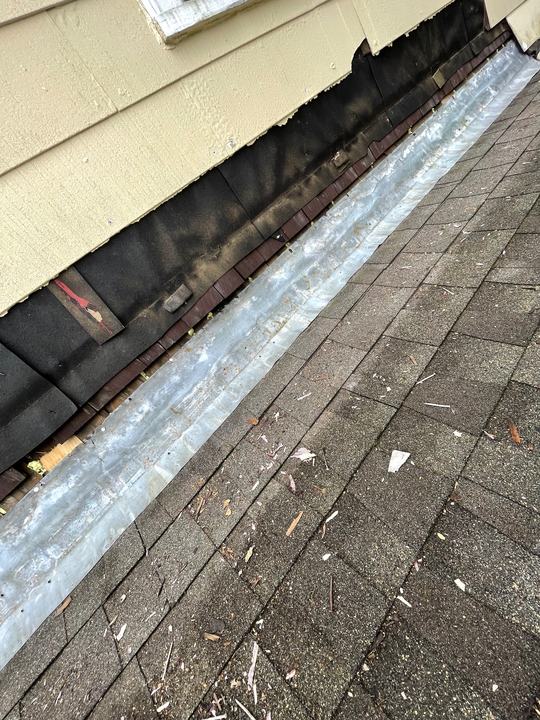
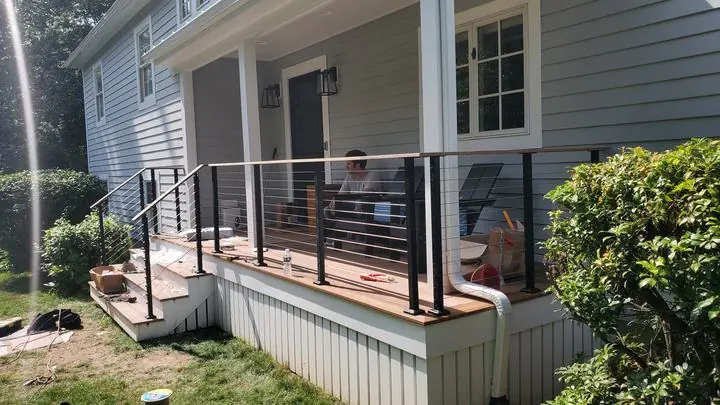
- The ledger board. This is the beam bolted to the house that carries one side of the porch. If the flashing above it is missing or rusted out, water runs behind it every storm and rots both the ledger and the house framing.
- Post bases. Posts sitting directly on concrete or on a flat deck surface wick water up into the end grain.
- Stair stringers. The bottom of the stringer sits closest to the ground, snow and puddles, so it rots first.
- Layers of paint. On many Winter Hill and Spring Hill porches I find decades of paint trapping moisture in the wood underneath.
- Stacked loads. On a triple-decker, the top porch often bears down through the ones below. A weak spot on the first floor affects everyone above it.
Warning signs you shouldn't ignore
- Soft or spongy decking when you step near the house wall.
- Railings that move when you lean on them.
- A porch that slopes toward the house, or a visible gap where it meets the siding.
- Rusted hangers, bolts or nails, or rust streaks running down the trim.
- Stair treads that flex, crack or have pulled away from the stringer.
- Posts that are cracked, leaning, or dark and crumbly at the bottom.
If you see more than one of these, keep gatherings off the porch until someone checks the framing.
Winter ice and snow on porches and stairs
Winter is when porch problems turn into injuries. Ice builds up on stairs that never see the sun, and snow piled on a top porch adds weight to framing that may already be tired.
- Shovel porches and stairs down to the surface, not just a footpath.
- Keep downspouts from dumping onto stairs, where meltwater refreezes overnight.
- Remember the sidewalk too: the City says sidewalks must be cleared within six daylight hours after snow stops falling (City of Somerville snow rules).
Do you need a permit to repair or rebuild a porch?
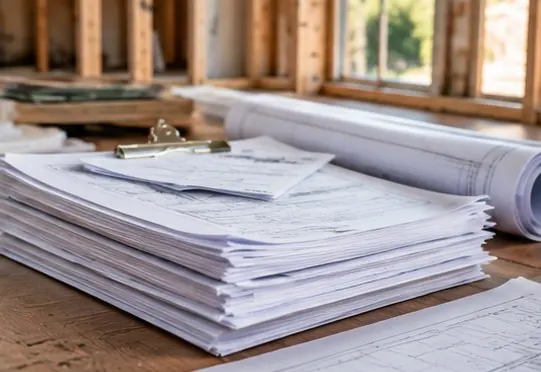
In most cases, yes. Somerville ISD says a permit is needed to construct, reconstruct, alter or repair a structure, and its FAQ lists painting, tiling and flooring as the main exceptions (Somerville ISD Building Division). Replacing rotted framing, stairs or railings is well beyond painting. Permits are applied for online through CitizenServe. My Somerville building permit guide walks through the process.
One common worry: rebuilding a porch is generally not "demolition" for historic review purposes. The City's Demolition Review Ordinance excludes "minor projects," and that definition includes adding or altering a porch or deck on a one-, two- or three-unit structure (Somerville Zoning Ordinance, Demolition Review). Local Historic Districts have their own rules, so check if your house is in one.
Code basics for guards and handrails
Massachusetts uses its own building code, 780 CMR. Its residential volume is based on the 2021 International Residential Code and covers one- and two-family homes, while larger buildings like three-family triple-deckers generally fall under the main building code (mass.gov, 780 CMR). That matters because the two volumes don't always ask for the same guard height.
- Handrails on stairs are set between 34 and 38 inches above the stair nosings.
- Guards (the railing around the porch edge) have to be high and strong enough to stop a fall, with openings small enough that a child can't slip through. Many original porch rails are lower than today's code allows.
- When you rebuild, the new guards and stairs have to meet current code. Your plans and the ISD inspection confirm the right numbers for your building.
City help for income-eligible owners
Somerville's Home Improvement Program funds health and safety repairs in buildings of up to seven units, and its list specifically includes repairing or replacing stairs, railings or porches in poor condition. Residents of the funded units must be at or below 80% of area median income, and the loan balance is due when the property is sold, transferred or cash-out refinanced. You start by filling out the interest form on the City's page. For other ways to pay for upgrades, see my Somerville rebates and loans roundup.
Need a hand?
If your porch feels soft, your railing wobbles, or you just want a second set of eyes before winter, I'm happy to come take a look. I handle the permit, the framing and the final inspection. Book a walkthrough and we'll figure out whether it needs a repair or a full rebuild.
Frequently asked questions
Do I need a permit to replace porch stairs in Somerville?
Generally yes. Somerville ISD requires a building permit for exterior repair and reconstruction work, with painting, tiling and flooring as the main exceptions. Apply through CitizenServe.
Is rebuilding a porch considered demolition in Somerville?
Usually not. The Demolition Review Ordinance excludes minor projects, which include adding or altering a porch or deck on a one-, two- or three-unit building. Local Historic Districts have separate rules.
What height should a stair handrail be in Massachusetts?
Massachusetts code sets handrails between 34 and 38 inches above the stair nosings. Guard heights depend on which part of the code applies to your building, so confirm during permitting.
Can the City of Somerville help pay for porch repairs?
Yes, for eligible properties. The Home Improvement Program funds health and safety repairs, including porches, stairs and railings, where residents are at or below 80% of area median income.
See everything I do, how I price work and the towns I work in.
Read this next
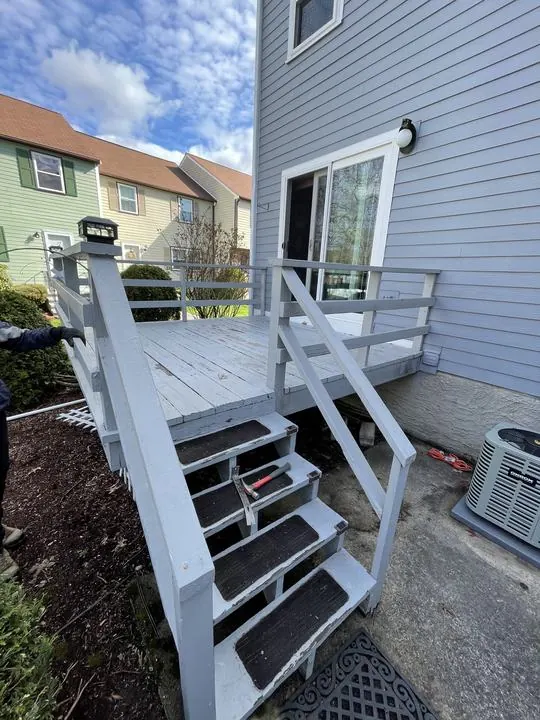 Kitchens, Baths & ExteriorsPorch rebuild cost in Somerville: what drives the price on a triple-deckerPorch rebuild cost in Somerville explained: rot, stacked triple-decker porches, permits, 42-inch guards, stair rules and what really drives the price.4 min read · Keep reading →
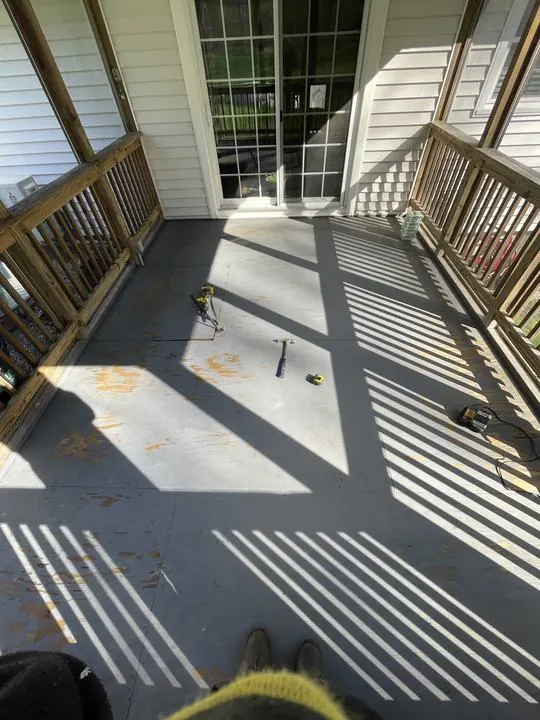 Permits & RulesSecond means of egress in Massachusetts: what triple-decker owners need to knowSecond means of egress in Massachusetts for Somerville triple-deckers: how many exits the code requires, back stairs, fire escapes and renovation triggers.4 min read · Keep reading →
 Costs & BudgetsMoney for your Somerville home: rebates, grants and 0% loans worth knowing in 2026Mass Save heat-pump rebates drop on January 1, 2027. Here are the City and state programs that can pay for part of your project — and how to use them.3 min read · Keep reading →
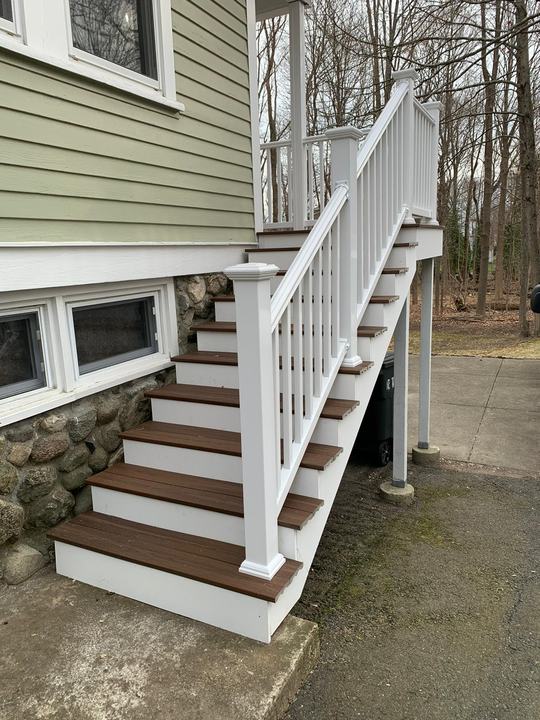 Kitchens, Baths & ExteriorsDeck cost per square foot in Massachusetts: real Boston numbers for wood and compositeDeck cost per square foot in Massachusetts from 2025 Boston data: about $64 for wood and $81 for composite, plus footings, permits and railing code.4 min read · Keep reading →
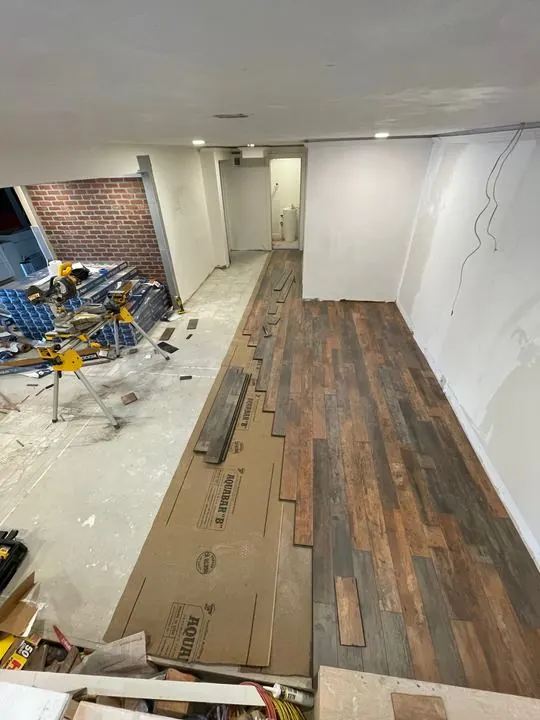 Home Care & SafetySagging floors in an old house: what is normal, what is not, and how I fix themSagging floors in an old house in Somerville or Greater Boston: causes, normal settling vs a real problem, sistering joists, new posts and repair costs.4 min read · Keep reading →
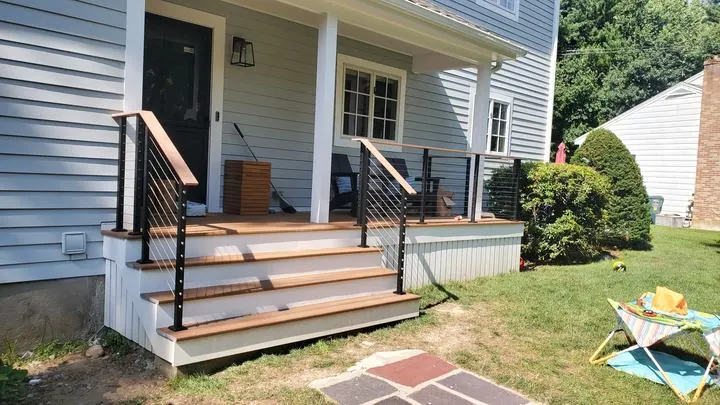 Home Care & SafetySomerville snow and ice rules for property owners: sidewalks, fines and parkingSomerville snow rules for property owners: the six-daylight-hour sidewalk deadline, fines, snow emergency parking, hydrants, roofs and how to report.3 min read · Keep reading →
Mateus Magno founded Magno & Co in 2020. He is a licensed Massachusetts Construction Supervisor (CS-123658), registered Home Improvement Contractor (HIC #220484) and certified Lead-Safe Renovator Supervisor who has renovated and managed over $5 million in projects across Greater Boston.
More about Mateus →