






Cabinet Tariffs, Jan 1, 2027: Should You Order Before the Deadline?
A 50% cabinet tariff is scheduled for Jan 1, 2027. What a builder sees on supplier invoices, how price dates and allowances work, and when ordering early is smart.
 Mateus Magno
Licensed Construction Supervisor · November 18, 2026 · 8 min read
"Why did my quote go up?" and "Should I order cabinets before January 1?" are two questions I hear constantly from Greater Boston homeowners. Both come from the same place: tariff news that changes faster than a kitchen design does.
Here is what I can confirm as of November 18, 2026, what I could not confirm, how price dates and allowances work in a contract, and a plain test for when buying early makes sense.
What is the cabinet tariff date, exactly?
The cabinet tariffs are not the ones the Supreme Court struck down. They come from a different law, Section 232, which covers products the government treats as national-security imports. Here is the timeline I could verify:
- Mid-October 2025: a 25% duty on imported kitchen cabinets and vanities, and on certain upholstered wooden furniture, took effect on October 14, 2025. Softwood lumber got a 10% duty at the same time.
- December 31, 2025: a new proclamation postponed the planned increase by one year. The White House fact sheet says the 25% rate stays and the increase is delayed while trade talks continue.
- January 2, 2026: NAHB reported the cabinet and vanity rate staying at 25% at least through January 1, 2027, when it was set to rise to 50%.
- February 20, 2026: the Supreme Court ruled 6-3 that the president overstepped under a different law (IEEPA). Banker & Tradesman reported the ruling did not cover steel, aluminum, lumber or kitchen cabinets.
Customs-broker and law-firm summaries also list lower capped rates for goods from the UK (10%), the EU and Japan (15%), and trade deals can change a country's rate. I did not check the proclamation text or whether those caps carry over to the scheduled 50% rate, so ask your supplier which rate applies to the country your cabinets are made in.
What I could not confirm
I found no proclamation, delay or cancellation since the one signed December 31, 2025. I also found no news on what came of a Commerce Department wood-products update that the 2025 proclamation set for October 1, 2026. That means the 50% date may still be on, may be pushed again, or may be changed. Nobody can tell you which, and I won't pretend to.
So everything below is written to work either way. Check the Federal Register or your supplier's latest notice the week you decide.
What do supplier invoices actually show?
Most homeowners never see supplier paperwork, so tariffs show up as a vague "prices went up." This is how I read it as a builder, and what I'd ask your contractor to show you.
| Item | What the paperwork can show | What I could verify |
|---|---|---|
| Cabinets and vanities | A surcharge line, a new price list, or a quote with a short expiry date | Section 232 duty of 25% now, 50% scheduled January 1, 2027 |
| Lumber | Price swings between one order and the next | 10% Section 232 duty on softwood lumber since October 2025 (Canadian softwood also carries separate anti-dumping and countervailing duties), plus ordinary supply and demand; Banker & Tradesman noted some mills cutting output |
| Windows | A price update on imported or metal-heavy products | A Boston developer told Banker & Tradesman in February 2026 that imported European and Canadian windows, HVAC equipment and appliances rose by as much as 50% in some cases. That is one developer's estimate, not a Massachusetts average |
| HVAC equipment | Equipment price changes and longer quote gaps | Same developer comment. I have not traced which tariff applies to which model |
| Fuel and freight | Delivery charges | In NAHB's Q2 2026 survey, 74% of remodelers said suppliers raised prices since March, averaging 6.7%, and the survey tied that to fuel costs |
The last row matters. Not every increase is a tariff. A fair contractor can show you the supplier quote that moved. A contractor who says "tariffs" and can't show you a document is giving you a reason, not a number. See why quotes differ so much for more on reading proposals side by side.
I'm not going to print figures from my own invoices here. Prices change by supplier, product line and week, and a number from my files would be stale before you read it.
How do price-validity dates and allowances work?
Two lines in a proposal carry most of the tariff risk.
The price-validity date. A proposal is a price for a stated scope on a stated day. Suppliers expire their quotes, so a contractor passes that expiry along: "this price holds until [date]." It is not a pressure tactic if the date matches a supplier quote you can see. It is one if the date is tomorrow and nobody can show you why.
The allowance line. An allowance is a placeholder amount for something you haven't picked yet, like cabinets or tile. If you choose something that costs more, the difference becomes a change order. The two failure modes are an allowance set too low to win the job, and a vague allowance with no product named. Ask for the cabinet allowance to say which line and supplier it is based on.
The same goes for any "material price adjustment" clause. In Massachusetts, a home improvement contract has to state the total price, along with start and completion dates and a payment schedule. You can read the requirements in Chapter 142A, Section 2 and in my contract guide. My view is that any adjustment should be tied to named items, documented by a supplier invoice, capped, and run both ways. An open-ended "prices may change" line leaves the homeowner holding the risk with no ceiling.
When does ordering before January 1 make sense?
Ordering early is a bet on a date I can't confirm, so I use a checklist instead of a feeling. I'd consider it only if all of these are true:
- The design is final. Layout, door style, finish, appliance sizes and sink are chosen and signed off.
- The measurements are confirmed on site, not taken from a drawing, and any walls, plumbing or wiring that affect the layout are known.
- You can pay the deposit without strain. Massachusetts caps a home improvement deposit at the greater of one-third of the price or the cost of special-order materials. See my deposit guide.
- The work can begin in a reasonable window, and you have somewhere safe and dry to store boxes until then.
- The supplier confirms in writing that your price is firm for your order, not "subject to tariff changes."
That last point is the one people skip. A cabinet distributor I read on this topic said the duty is applied when goods clear customs, not when you sign a contract. Treat that as one supplier's guidance. It does mean an order placed in December is not automatically protected. What protects you is the supplier's written price commitment.
When does ordering early not make sense?
I would hold off in these cases:
- The layout is still moving. Reordering a wrong cabinet usually costs more than the tariff it was meant to beat.
- The walls haven't been opened. In a 100-year-old Somerville or Cambridge house, plaster, old wiring and uneven floors can change the plan. Cabinets ordered before demo are cabinets ordered before the surprises.
- Work won't start for months, and the deposit would sit with a supplier.
- The tariff might not matter for your choice. The duty applies to imports. Cabinets made in the U.S. may be less exposed, though they can have their own price swings, so ask which you are quoted.
Also remember the downside case. If the increase is postponed again or dropped, an early order may have bought you nothing but a long storage period. If it takes effect, a delay could cost you. I'd weigh that against how firm your plan is, not against the headline. My kitchen remodel mistakes post covers other ways an early order goes wrong.
Can you avoid new cabinets altogether?
If your cabinet boxes are solid and your layout works, refacing swaps doors and drawer fronts and keeps the boxes. It isn't right for every kitchen, and some door and drawer parts may still be imported, so ask where they come from. It takes the largest tariff-exposed item out of the budget for some homes.
If you are planning a full kitchen, the kitchen remodel cost guide lays out where cabinets sit in the overall budget, and my Kitchen Remodel Planner ebook has a Selections Sheet, a Budget Worksheet and an Order-By Calendar. Allowances and order dates are also where schedules slip, so read how long a kitchen remodel takes.
One more date that is not a tariff: Mass Save's heat pump rebate drops for installs on or after January 1, 2027. If you are comparing HVAC equipment costs, read what changes on that date and what a heat pump costs. The two dates are easy to blur together, so keep them separate in your planning.
What should you do this week?
- Ask your contractor for the supplier quote behind the cabinet line, with its expiry date.
- Check that your allowance names a product line and supplier.
- Read any price-adjustment language: is it tied to named items, capped and two-way?
- Run the ordering checklist above. If any box is empty, don't rush the order.
- Get the supplier's price commitment in writing before you pay a deposit.
- Check the Federal Register or your supplier's newest notice right before you sign.
Want a second set of eyes on your quote?
If you have a proposal with a price-validity date, a thin allowance or a "prices may change" clause, I'm happy to look at it. A free walkthrough gets you my read on which lines are real and which need a question. You can reach me here. There's no pressure to hire us.
Frequently asked questions
Is the kitchen cabinet tariff going to 50% on January 1, 2027?
As of November 18, 2026, that is the scheduled date. A proclamation signed December 31, 2025 postponed the increase from January 1, 2026 by one year, and I found no newer action. The date could still hold, slip or change, so check the latest official notice before you decide.
What is the cabinet tariff right now?
The Section 232 duty on imported kitchen cabinets and vanities has been 25% since October 14, 2025, based on the White House fact sheet and NAHB reporting. Some countries may have lower caps, so ask your supplier what applies to your cabinets.
Did the Supreme Court ruling end the cabinet tariffs?
No. On February 20, 2026 the Court ruled against tariffs imposed under IEEPA. Banker & Tradesman reported that the ruling did not cover steel, aluminum, lumber or kitchen cabinets, which fall under a different law.
Should I order my cabinets before January 1?
Only if the design is final, the site measurements are confirmed, the work can start soon, you can afford the deposit and the supplier confirms the price in writing. If the layout may change or the walls haven't been opened, waiting is usually safer.
How can I tell a real tariff increase from padding in my quote?
Ask to see the supplier quote or invoice that changed, with its date. A fair contractor can show it. Also check whether the contract ties any adjustment to named items, caps it and passes decreases back to you as well as increases.
What is an allowance in a renovation contract?
It is a placeholder amount for something not yet chosen, such as cabinets. If your choice costs more, the difference is added by change order. Ask that the allowance name the product line and supplier it is based on.
See my published prices and how I quote a job, and the towns I work in.
Read this next
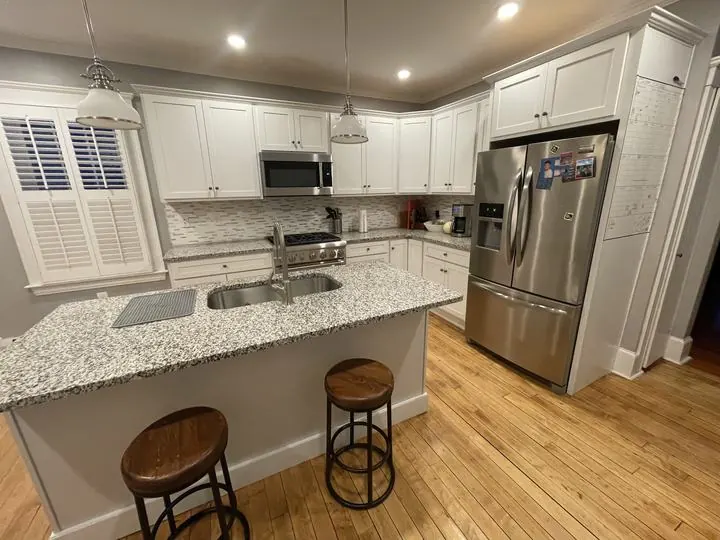 Costs & BudgetsKitchen remodel cost in Massachusetts: what Boston-area kitchens really costKitchen remodel cost in Massachusetts: 2025 Boston Cost vs. Value figures and what drives the price in Somerville and Cambridge triple-deckers and condos.4 min read · Keep reading →
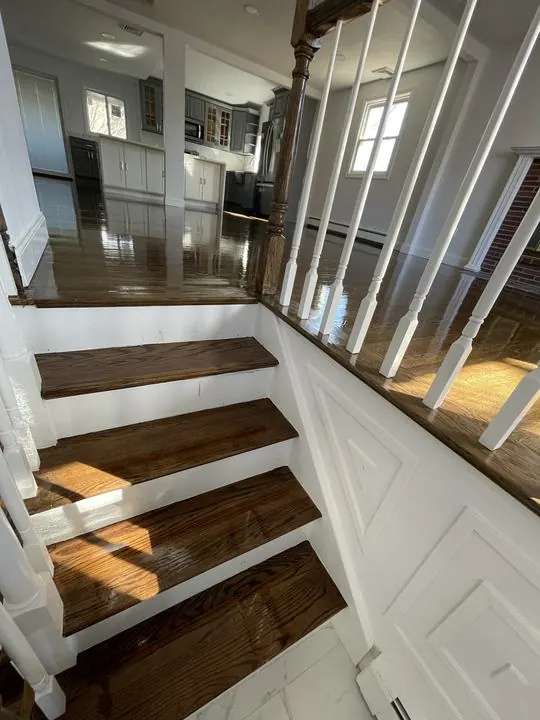 Hiring & PlanningChange orders in construction: what they are and how to handle them in an old houseChange order construction basics for Somerville and Cambridge homeowners: why change orders happen in old houses, what to put in writing and the red flags.4 min read · Keep reading →
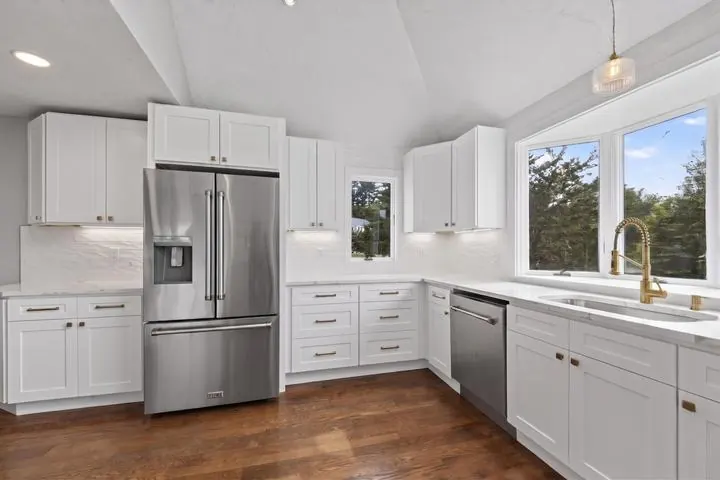 Hiring & PlanningMassachusetts home improvement contract requirements: what must be in writingMassachusetts home improvement contract requirements under c. 142A: required terms, notices and your 3-day right to cancel, from a Somerville builder.4 min read · Keep reading →
 Hiring & PlanningMassachusetts contractor deposit law: how much can a contractor ask for upfront?Massachusetts contractor deposit law in plain English: the one-third cap, the special-order exception and what a fair deposit looks like in Somerville.4 min read · Keep reading →
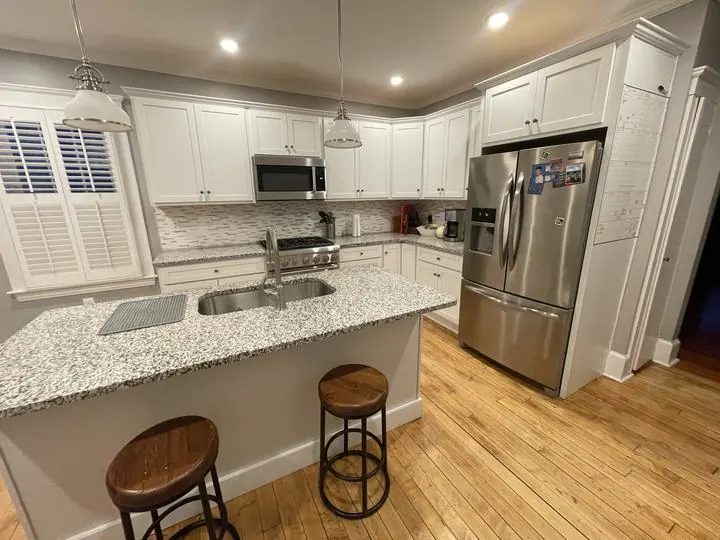 Costs & Budgets3 quotes, 3 very different prices: what is really inside each contractor bidSame job, three bids, very different totals. A Somerville builder on what is inside a quote, why they differ and how to compare them fairly.9 min read · Keep reading →
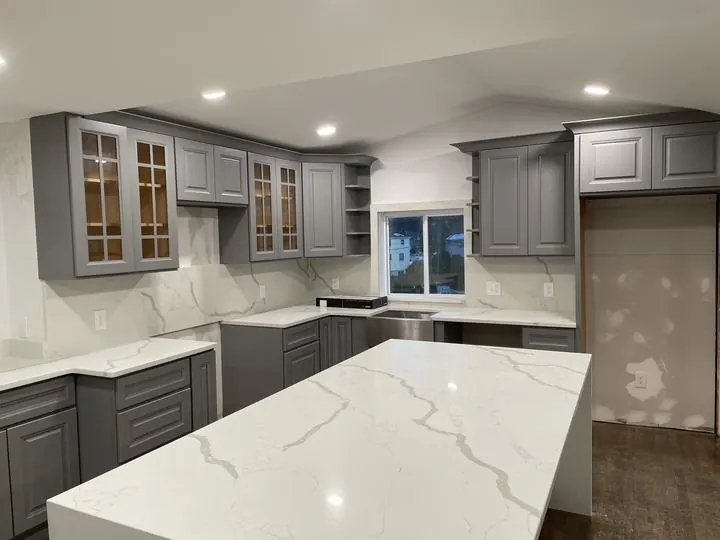 Kitchens, Baths & ExteriorsKitchen cabinet refacing cost vs painting vs new cabinets in Somerville and CambridgeKitchen cabinet refacing cost vs painting or new cabinets in Somerville and Greater Boston: Boston remodel figures, layout limits and lead-safe rules.4 min read · Keep reading →
Mateus Magno founded Magno & Co in 2020. He is a licensed Massachusetts Construction Supervisor (CS-123658), registered Home Improvement Contractor (HIC #220484) and certified Lead-Safe Renovator Supervisor who has renovated and managed over $5 million in projects across Greater Boston.
More about Mateus →